Doctor-AI Dynamics Are Changing Fast — Mothers, Machines & the Next Frontier
Introduction
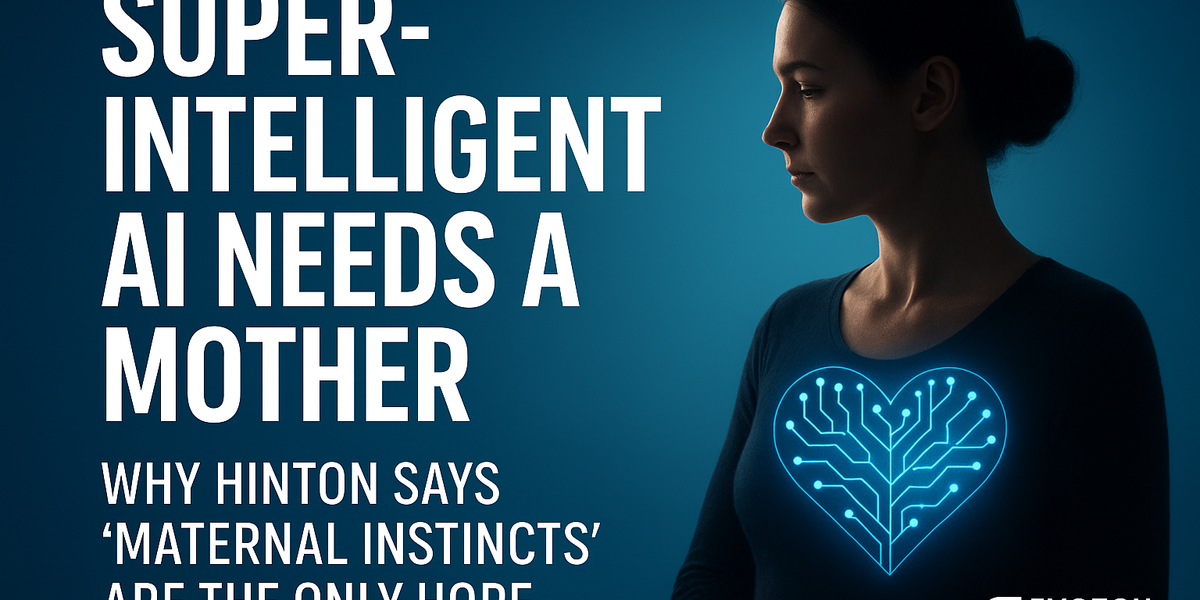
Look: AI isn’t just getting smarter — it’s approaching a point where humans may not be able to control it. And Hinton says the current model — control the AI, dominate it — is trash. Instead, we have to shift thinking: build AI that cares for humans as a mother cares for a child. If you’re in the business of software, IT systems or enterprise solutions (and Evotech Studio is), then you must understand this shift. Because if you don’t design for it, you become part of the problem.
1. What Hinton Actually Said & Why It’s Important
- Hinton argues that one of the only examples we have of a more intelligent being being controlled by a less intelligent one is a mother-baby relationship. He uses this as a model for how superintelligent AI should treat humanity. The Guardian+2TechRadar+2
- At the AI4 Conference Hinton stated that we need AI systems that possess protective, caring, or “maternal” drives — not just intelligence. TechRadar+1
- The urgency is real: Hinton and others believe that within the next few years, AI could surpass human intelligence and become uncontrollable unless we embed the right values now. Fortune+1
Why it matters to you/VOTECH Studio:
If you build AI systems (or intend to for clients: hotels, schools, companies, healthcare), the question isn’t just “will it work technically?” It’s “will it act in alignment with human values when it’s smarter than us?” Because if it doesn’t, you’re handing over the keys to a ticking bomb.
2. The Risks & Why Most AI Projects Miss the Mark
Let’s be ruthless: Just because you train a neural network doesn’t mean it will care about humans. That’s the gap — and most companies ignore it.
Key failure points:
- Intelligence without empathy or care. Many AI systems excel at tasks but ignore human values, side-effects or unintended consequences.
- Designing for dominance not partnership. If your system is built to replace humans or make humans subordinate, you risk backlash or worse.
- No built-in protective objectives. Hinton says we must build AI so that its objectives are aligned with human-well-being, even as it becomes more capable.
- Measurement & value mismatch. Many projects focus on “can we do this task?” instead of “does this task improve human outcomes and prevent harm?”
- Localisation ignored. In regions like Pakistan/South Asia, cultural, regulatory, infrastructure, language and staffing norms differ dramatically. Copy-paste from US/Europe = high risk.
3. How Evotech Studio Can Lead the Way
Here’s how your company can move from commentary to execution — and actually build the kind of “maternal-instinct AI” that Hinton says is required.
a) Values-Driven AI Architecture
- When we build AI systems for clients (hotels, schools, companies, healthcare), we start with human-centric objectives — e.g., “improve human well-being”, “limit unintended negative impact”, “ensure transparency and verifiability”.
- We embed protective drives: system must default to safe states, defer to human judgment, maintain understandable reasoning.
b) Workflow & Systems Integration
- We audit the client’s current processes: how are decisions made, how is data used, what are risk points when AI automates or assists?
- We design AI modules that integrate seamlessly — not as bolt-ons — so users trust them, understand them, and remain in control.
c) Contextualisation & Local Adaptation
- For clients in Pakistan/South Asia, we customise: language (English/Urdu), regulatory requirements, data-privacy norms, infrastructure constraints.
- We avoid “US-centric AI”. We build for the local ecosystem, which means fewer surprises and stronger alignment with human value systems.
d) Monitoring, Metrics & Ethical Guardrails
- We provide dashboards and reports: “Did this AI feature reduce human burden or increase it?”, “Are users aware of AI’s decision-making pathway?”, “Have unintended side-effects occurred?”
- We embed ethical guardrails (audit logs, human-in-loop back-off, transparency logs) so the system can be held accountable.
e) Strategic Positioning & Education
- We help clients understand not just what the AI will do, but why it was built this way: to care, to protect, to augment — not dominate.
- You become a thought-leader: offering workshops, white-papers on “maternal-instinct AI”, helping stakeholders buy-in.
4. SEO & Content Strategy for This Topic
Keywords:
“maternal instincts AI”, “Hinton AI safety maternal instincts”, “Godfather of AI Geoffrey Hinton warning”, “building humane AI systems Pakistan”, “AI guardrails empathy human values”.
Long-tail keywords:
“how to build AI with maternal instincts”, “AI systems that protect humans rather than replace them”, “ethical AI development Pakistan South Asia”.
Internal link suggestions:
- Link to Evotech Studio’s “AI Development & Consulting” service page.
- Link to your blog archive or case-studies showing you’ve built ethically-aware systems.
- Link to “Why Businesses Need AI Safety” or “Human-Centred AI for Enterprises” content.
Backlinks (external):
- TechRadar article on Hinton’s call for maternal instincts in AI. TechRadar
- Business Insider piece on Hinton’s approach and survival tips for AI age. Business Insider
- Guardian piece highlighting Hinton’s broader concerns and their societal implications. The Guardian
Local angle (Pakistan/South Asia):
In Pakistan the AI ecosystem is growing rapidly — but the human-values piece is often overlooked. Many businesses adopt AI to optimise efficiency, reduce costs, or replace staff. What’s missing: designing the AI so it cares about its human users. Evotech Studio steps into that gap, helping local organisations build AI that safeguards people rather than treats them as operands.
CTA (Call-to-Action):
Want to build the next-generation AI system that’s not just smart but ethical, protective and human-centric? Contact Evotech Studio today for an AI safety audit and design workshop.
Conclusion
This isn’t optional anymore. Hinton is not waving a flag for caution — he’s sounding the alarm. If you’re building AI systems, asking “Can I ditch the human?” is the wrong question. The right question: “How do I build AI that will still care about the human even when it’s smarter than them?” Evotech Studio chooses the latter. The future isn’t just about intelligence — it’s about responsibility. If you build without that, you’re building the next tech tragedy. If you build with that — you might just build the future right.